By Chuck Stuckey, MD
Anyone who works or plays outside, or has pets that spend time outside, is at risk for contracting a tick-borne (causing) disease. Deciduous forests, grassy areas, and brush piles are ideal habitats for ticks. Tick season in Virginia is now year-long but peaks in spring and summer. Ticks are known for carrying infectious bacteria, parasites, and viruses in their saliva and gastrointestinal tracts that can easily be passed to a host after a bite. Virginia is a leading state for several of these potentially devastating tick-borne diseases. Gardening in Virginia can be a high-risk hobby or profession. Learning about these diseases is important. Many people bitten by a tick carrying disease never develop infection. The transmission of disease is dependent on attachment time and tick species. Removing a tick within 24 hours of attachment makes transmission of disease highly unlikely. However, some bites can lead to chronic illness and life-changing side effects. In rare cases, some bites can kill you. Early diagnosis and treatment are important in preventing a bad outcome. The best treatment is to prevent the tick bite in the first place.
There are twelve different tick-borne diseases seen in Virginia. I plan to focus on four of the most common: Lyme Disease, Rocky Mountain Spotted Fever (RMSF), Ehrlichiosis, and Alpha-gal Syndrome
Lyme Disease
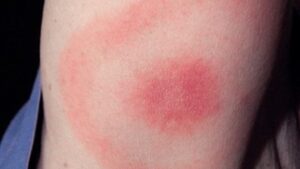
Lyme Disease is the most common tick-borne disease in Virginia. An estimated 200-300 cases are reported each year, but it is believed that cases are underreported. It occurs when a person is bitten by a blacklegged tick (deer tick) infected with the bacterium Borrelia burgdorferi. Three to thirty days after the bite, about 80% of people develop a red expanding rash. The rash is not painful or itchy and can be clear in the center, creating a characteristic “bulls-eye”. Other symptoms include fever, headaches, and feeling tired. If untreated, infected individuals may develop facial weakness, severe headaches and stiff neck, and heart palpitations from an irregular heartbeat.
Months to years later, some who were bitten may develop joint pain and swelling from arthritis, chronic fatigue, arm and leg pain and tingling, heart arrhythmias requiring a pacemaker, and heart failure. Long-term health problems occur in 20% of those who suffered from Lyme Disease. Seeking medical care early is important. Treatment with antibiotics (Doxycycline) can prevent long-term complications. Finding and removing ticks within 24 hours prevents transmission of Lyme disease.
Rocky Mountain Spotted Fever (RMSF)
RMSF occurs when bitten by the American dog tick, Rocky Mountain Wood tick, or brown dog tick infected with the Rickettsia rickettsii
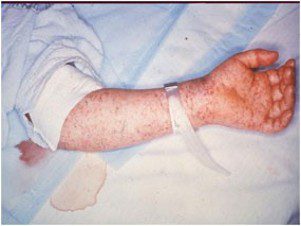
bacteria. The infection can be transmitted from the tick to the host ten to twenty hours after tick attachment. But there are reports that infection has occurred in as little as one hour from the time of attachment. Symptoms usually occur within two weeks of the bite. These symptoms include fever, chills, headache, muscle pain, and a rash which usually starts on the ankles and wrists and spreads to the rest of the body. Nausea, vomiting, and abdominal pain can also occur. If left untreated, RMSF can cause death. Early treatment with antibiotics (Doxycycline) can cure the disease. There are 300-400 cases of Rocky Mountain Spotted Fever in Virginia annually.
Ehrlichiosis
The second most common tick-borne disease in Virginia is Ehrlichiosis. It is caused by a bite from the lone star tick infected with Ehrlichia bacteria. Symptoms develop one to two weeks after an infected tick bite. Mild to severe symptoms include fever, headache, chills, muscle pain, nausea, vomiting, diarrhea, confusion, rash and red eyes. A rash occurs in 30% of infected adults and 60% of infected children. Ehrlichiosis can cause death. But early treatment with antibiotics (Doxyclycline) within five days is curative.
Alpha-gal Syndrome (AGS)
Alpha-gal Syndrome (AGS) is an allergy to mammalian meat (beef, pork, rabbit, lamb, venison) and products made from mammals such as gelatin and cows’ milk. The allergy involves a sugar (alpha-gal) that is found in most mammals. This sugar is found in the lone star tick and a bite injects this into the person’s skin. This later causes an immune response when the infected person eats meat or other mammalian product. The allergic reaction can be mild to severe and may be life threatening (anaphylaxis). However, not everyone bitten by the lone star tick develops AGS. Symptoms usually appear 2 to 6 hours after exposure. AGS is best prevented by preventing tick bites. People who have AGS should be aware of what meats or mammalian products not to eat. They should be aware of signs of an allergic reaction, know how to use an Epi-Pen and when to seek emergency care.
About Ticks and Tickborne Disease https://www.vcuhealth.org
More than just Lyme: What you need to know about other emerging tick-borne diseases https://ext.vt.edu
Tick-Borne Diseases in Virginia https://www.vdh.virginia.gov Tickborne Diseases
American Dog Tick
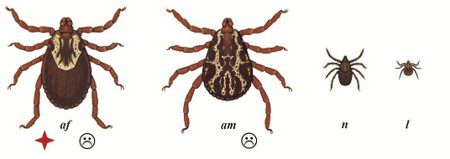
Blacklegged Tick

Lonestar Tick
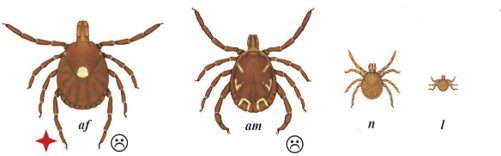
(from www.vdh.virginia.gov tick-identification)
Preventing Tick Bites
- Wear light-colored, smooth, tightly woven clothing so ticks can be readily seen and have trouble attaching to the fabric
- Wear a hat, long sleeves, and Tuck shirt into pants and pants into socks. Wear boots without laces or eyelets
- You can seal socks and pants with tape if needed
- You can use permethrin spray (tick repellent) on Make sure the clothes are dry before wearing, and DO NOT apply permethrin directly on skin.
- You can apply a bug spray with DEET to exposed skin-it can be a useful repellent
- Avoid tall grass and dense areas. Walk in the middle of paths.
- Don’t encourage deer to feed in your yard. Remove brush and leaf litter. Keep lawn mowed.
- When coming indoors, inspect for ticks on yourself, children, and Remember to examine groin, belly button, armpits, waist, head, and behind knees
- Wash clothing and dry at least 20-30 minutes in the dryer to kill ticks
- If you have been in a tick-infested area and develop symptoms or a rash, contact your health care provider or seek urgent/emergent care.
- Make sure your pet is up to date with tick prevention medication